What acoustic treatments actually transform a home theater listening experience?
Treatment often does more than new speakers. Here is what absorption and diffusion really change.
Absorbing the first reflection points near the speakers sharpens dialogue and imaging, while bass control in the corners evens out a boomy low end. Diffusion keeps the room lively without harshness. Balanced together, these treatments often transform the experience more than new speakers, because they fix the room every speaker plays into.
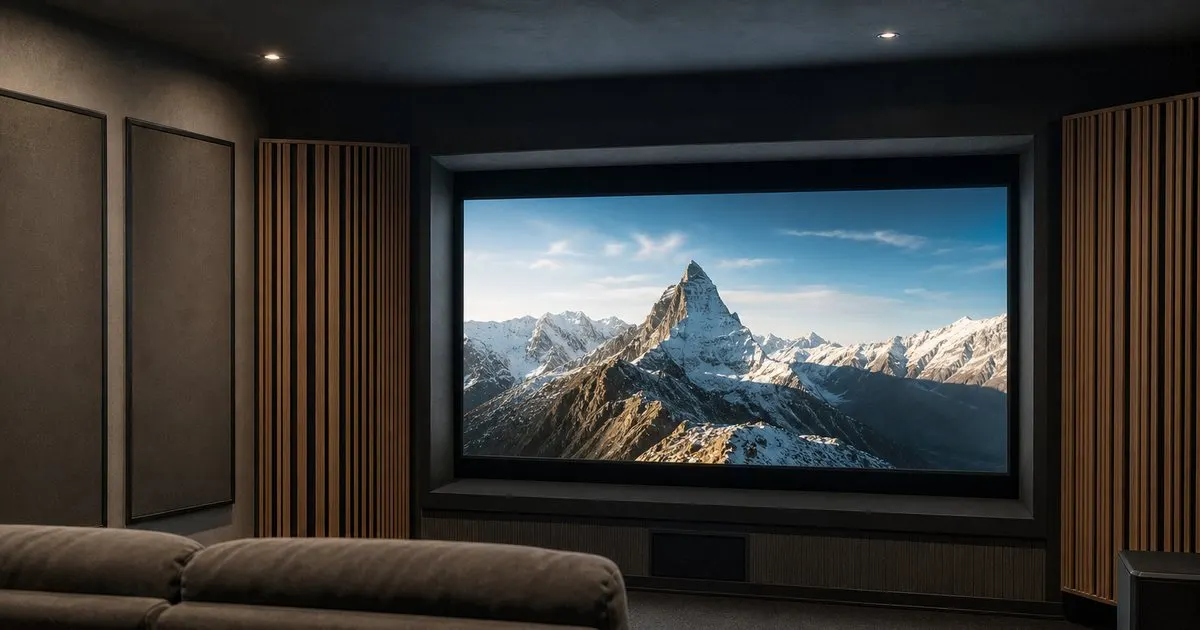
The room is an instrument
Every room colors sound through reflections, and an untreated space smears dialogue and blurs effects. The room is as much a part of the sound as the speakers. Related: What should you do when home cinema bass keeps traveling into the bedrooms above?
This is why treatment can do more for the experience than a component upgrade. You are fixing the space that every speaker has to play into. Related: Why does screen size depend on viewing distance more than budget?
Keep reading: How dark does a dedicated home cinema room need to be?, Which projector technology delivers the best image in a light controlled room?, How many seats can a luxury home cinema comfortably accommodate?. See how Theatrvault helps you an expert guide to designing a true home cinema.
Absorption at reflection points
Sound bouncing off the walls near the speakers arrives at your ears slightly late, muddying clarity. Absorbing those first reflection points sharpens dialogue and imaging.
A modest amount of absorption, placed precisely, often produces a striking improvement. Precision matters more than covering every surface.
Bass and low frequency control
Low frequencies build up in corners and create boom and unevenness across seats. Bass control, often in the corners, evens out the low end so it is tight rather than overwhelming. Related: How many subwoofers does a dedicated cinema room need for smooth, even bass?
This is the treatment buyers most often overlook and most often benefit from. Controlled bass makes a system sound composed rather than chaotic.
Diffusion and balance
Diffusion scatters sound to keep the room lively without harsh reflections, preserving a sense of space. Balanced with absorption, it keeps the room from sounding dead. Related: How do you ventilate a sealed home cinema room without adding audible noise?
The art is in the balance. Too much absorption dulls the room, too little leaves it harsh, and the right mix makes modest speakers sing.
- The room colors sound as much as the speakers do
- Absorbing first reflection points sharpens dialogue and imaging
- Bass control in corners evens out the low end
- Balancing absorption and diffusion keeps the room from sounding dead

Julien Jimenez
Julien Jimenez is an independent software builder based in Paris. He designs, ships, and operates focused SaaS products for small businesses and independent professionals. Read the full author page.
Frequently asked questions
Is treatment better value than new speakers?
Often, yes. Treatment fixes the room that every speaker plays into, so it can improve clarity and bass more noticeably than a component upgrade in an untreated space.
Can a room have too much treatment?
Yes. Excessive absorption makes a room sound dead and lifeless. The goal is a balance of absorption and diffusion that is clear without being sterile.
A Cinema Kept Behind Your Own Door
An expert guide to designing a true home cinema. Theatrvault is built to help you put this into practice.
Design your cinemaMore from the Theatrvault blog
How dark does a dedicated home cinema room need to be?
How many seats can a luxury home cinema comfortably accommodate?
Get the complete home cinema rooms guide
Our full buying guide, the price guide, and new research as we publish it. One email, no spam, unsubscribe any time.