What should you do when home cinema bass keeps traveling into the bedrooms above?
Bass that reaches the rest of the house is a structural problem, not an acoustic treatment problem. Here is how to find the transmission path, which retrofits actually work, and what to do when rebuilding is not an option.
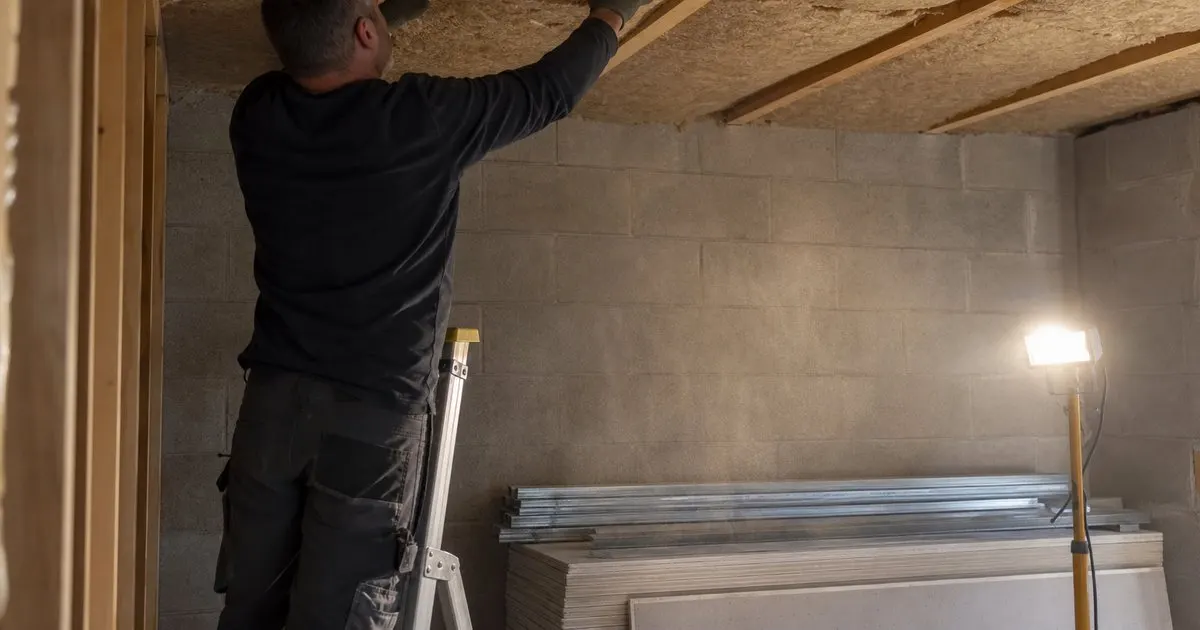
Absorption and isolation are not the same job
Bass traps, thick curtains, and fabric panels change how the room sounds to the people sitting in it. None of them stop energy from leaving the room. Isolation is a structural question: low frequencies carry long wavelengths and a great deal of energy, they pass easily through lightweight partitions, and they also travel as vibration through studs, floor joists, ductwork, and slab into rooms far from the cinema. That is why a room can measure beautifully inside, sound superb from the seats, and still keep a child awake two floors up. Related: How dark does a dedicated home cinema room need to be?
Recognizing the distinction changes where the money goes. Adding more absorption to a room that is already well treated will do essentially nothing for complaints upstairs. What reduces transmission is mass, decoupling, damping, and sealed air paths, applied in the right order to the right surfaces. It is unglamorous construction work rather than an audio purchase, and it is the most common regret we hear from owners who finished a cinema without thinking about the rest of the house around it. Related: Which projector technology delivers the best image in a light controlled room?
Keep reading: How dark does a dedicated home cinema room need to be?, Which projector technology delivers the best image in a light controlled room?, What acoustic treatments actually transform a home theater listening experience?. See how Theatrvault helps you an expert guide to designing a true home cinema.
Find the path before you spend anything
Bass leaves a room through specific, findable routes. Play a sustained low frequency test tone or a film scene you know well, then walk the house and put a hand on wall surfaces, door frames, duct grilles, stair stringers, and the floor above. Vibration you can feel in framing points to structure borne transmission. Sound that is noticeably louder at a register or a recessed light points to a flanking air path. Switch subwoofers off one at a time to learn which one dominates and at which frequencies the complaint appears.
The usual culprits are predictable. A hollow core or poorly sealed cinema door, ductwork running uninterrupted to bedrooms, recessed light housings puncturing the ceiling, an unsealed top plate, and subwoofers sitting directly on a joisted floor and driving it like a diaphragm account for most of what people hear elsewhere in the house. Sliding a subwoofer onto a temporary decoupling platform for one evening is a free experiment that often reveals how much of the problem is mechanical rather than airborne. Write down what changes with each test before ordering a single material. Related: Why does screen size depend on viewing distance more than budget?
Retrofits that genuinely reduce low frequency transmission
On the ceiling, the effective approach combines three things: decoupling with resilient clips and channel, insulation filling the joist cavity, and one or two layers of drywall with a viscoelastic damping compound between them. Doing only one of the three usually disappoints, because added mass on a rigidly connected surface still transmits vibration straight into the structure. Walls that share framing with living space follow the same logic, and the door should be solid core with full perimeter seals and a drop seal at the threshold, since a door is often the weakest element in an otherwise careful build.
Then close the air paths. Duct silencers, lined or long flexible runs, and offset registers cut the sound traveling through the mechanical system. Sealed back boxes handle recessed lights, and acoustic sealant handles every penetration, perimeter joint, and top plate. Expect diminishing returns: the first round of work usually produces a dramatic improvement for a modest cost, while the last few decibels of isolation cost far more than everything before them. Decide in advance how quiet is quiet enough, ideally with an acoustician who can measure the result rather than guess at it.
What to do when rebuilding is not an option
If the ceiling cannot come down this year, reduce the energy you need in the first place. Several smaller subwoofers distributed around the room produce smoother response than one large unit pushed hard, which generally means lower peak output for the same perceived impact in the seats. Taming a large room mode through placement and equalization removes the boomy peak that everyone upstairs hears loudest, and a restrained low frequency house curve, tuned by ear over films you know, often costs nothing and helps immediately.
Mechanical decoupling and seat borne bass close much of the remaining gap. Isolation platforms under subwoofers reduce the vibration delivered into the floor structure, and tactile transducers built into the seating deliver felt impact directly to the body at far lower room levels. Combined with sensible scheduling for late screenings and a habit of checking the level upstairs once in a while, these measures make an imperfectly isolated room genuinely livable while you plan a proper retrofit for the next renovation. Related: How many seats can a luxury home cinema comfortably accommodate?
- Acoustic treatment shapes sound inside the room; only structural isolation stops bass from reaching the rest of the house.
- Diagnose first by feeling for vibration in framing, listening at ducts and lights, and testing subwoofers one at a time.
- Effective retrofits combine decoupling, added mass, damping, cavity insulation, and sealed penetrations, never a single product.
- When rebuilding is impossible, distributed subwoofers, isolation platforms, and tactile transducers lower the level the room needs.

Julien Jimenez
Julien Jimenez is an independent software builder based in Paris. He designs, ships, and operates focused SaaS products for small businesses and independent professionals. Read the full author page.
A Cinema Kept Behind Your Own Door
An expert guide to designing a true home cinema. Theatrvault is built to help you put this into practice.
Design your cinemaMore from the Theatrvault blog
Get the complete home cinema rooms guide
Our full buying guide, the price guide, and new research as we publish it. One email, no spam, unsubscribe any time.