How many seats can a luxury home cinema comfortably accommodate?
Seat count is set by sightlines and distance, not just floor area. Here is how to plan rows that all work.
As many as fit within good sightlines and the right viewing distance, comfortably spaced, which is usually fewer than the floor area alone suggests. Every seat must see the whole screen and sit within the distance sweet spot. Tiering the back row on a riser is what lets a second row genuinely work in a longer room.
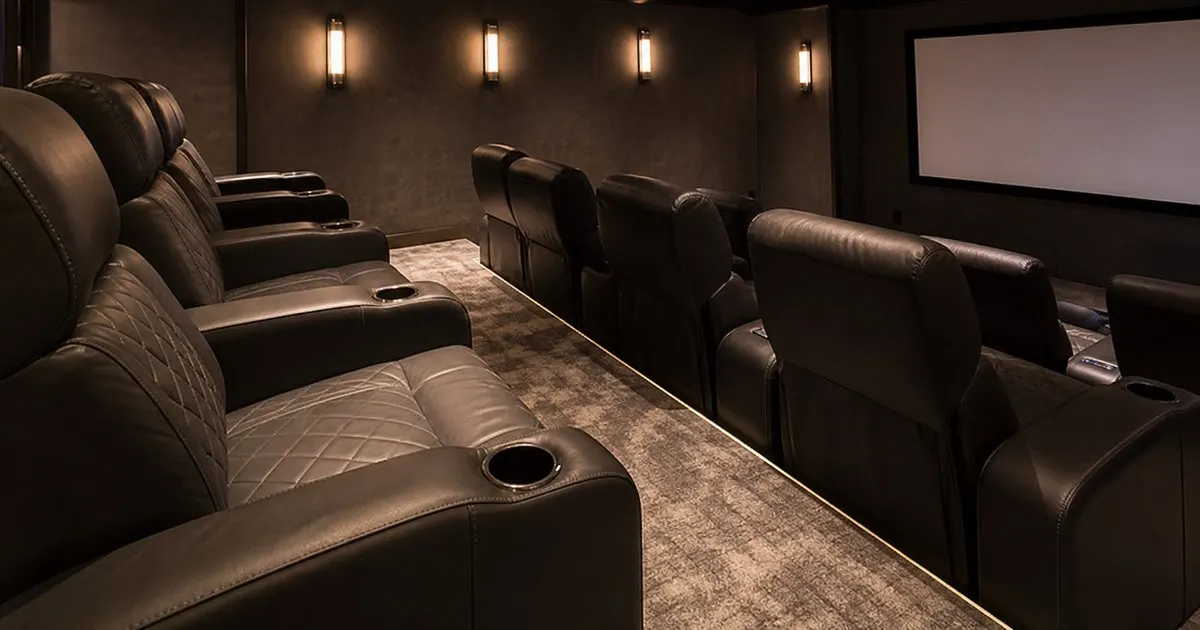
Sightlines set the limit
The real constraint on seating is not floor space but sightlines. Every seat must see the whole screen comfortably, without craning or peering over the row in front. Related: When should a home cinema use an acoustically transparent screen in front of the speakers?
A room can hold more chairs than it can hold good seats. Planning around clear sightlines is what keeps every place in the room worth sitting in.
Keep reading: How dark does a dedicated home cinema room need to be?, Which projector technology delivers the best image in a light controlled room?, What acoustic treatments actually transform a home theater listening experience?. See how Theatrvault helps you an expert guide to designing a true home cinema.
Distance defines the sweet spot
Seats should sit at a distance that fills the field of view without overwhelming it. Too close strains the eyes, too far shrinks the cinema effect. Related: Why does screen size depend on viewing distance more than budget?
This sweet spot, set against the screen size, limits how many rows genuinely work. Beyond it, seats exist but the experience fades.
Tiering the rows
In a longer room, raising the back row on a riser restores the sightlines that a flat floor would compromise. Tiering is what lets a second row work properly.
Done well, tiering turns a room that could seat one good row into one that seats two. It is often the difference between a cinema and a sofa in front of a screen. Related: How dark does a dedicated home cinema room need to be?
Comfort and spacing
Luxury seating needs room to recline and to pass without disturbing others. Generous spacing lowers the seat count but raises the quality of every place. Related: Can a home theater room add measurable value to a luxury property?
The honest answer to how many seats a room holds is however many sit within good sightlines and distance, comfortably spaced. Quality of seat beats quantity every time.
- Sightlines, not floor area, set the real seat limit
- Seats should sit within the distance sweet spot for the screen
- Tiering the back row restores sightlines in a longer room
- Generous spacing raises the quality of every seat

Julien Jimenez
Julien Jimenez is an independent software builder based in Paris. He designs, ships, and operates focused SaaS products for small businesses and independent professionals. Read the full author page.
Frequently asked questions
Why can I not just add more chairs?
Because seats outside good sightlines or the right viewing distance offer a poor experience. A room holds only as many good seats as its geometry allows, not as many chairs as fit.
Do I need a riser for two rows?
In most rooms, yes. Raising the back row on a riser restores the sightlines a flat floor would block, which is what makes a second row genuinely usable.
A Cinema Kept Behind Your Own Door
An expert guide to designing a true home cinema. Theatrvault is built to help you put this into practice.
Design your cinemaMore from the Theatrvault blog
Get the complete home cinema rooms guide
Our full buying guide, the price guide, and new research as we publish it. One email, no spam, unsubscribe any time.