How dark does a dedicated home cinema room need to be?
Contrast lives and dies on light control. Here is how dark a room truly needs to be, and why.
It needs to be as dark as you can control during a film, because a projector makes its blacks from the absence of light. Sealing daylight, using dark matte surfaces, and relying on low indirect lighting preserves contrast and depth. You are aiming for darkness on demand, not a room that is permanently pitch black.
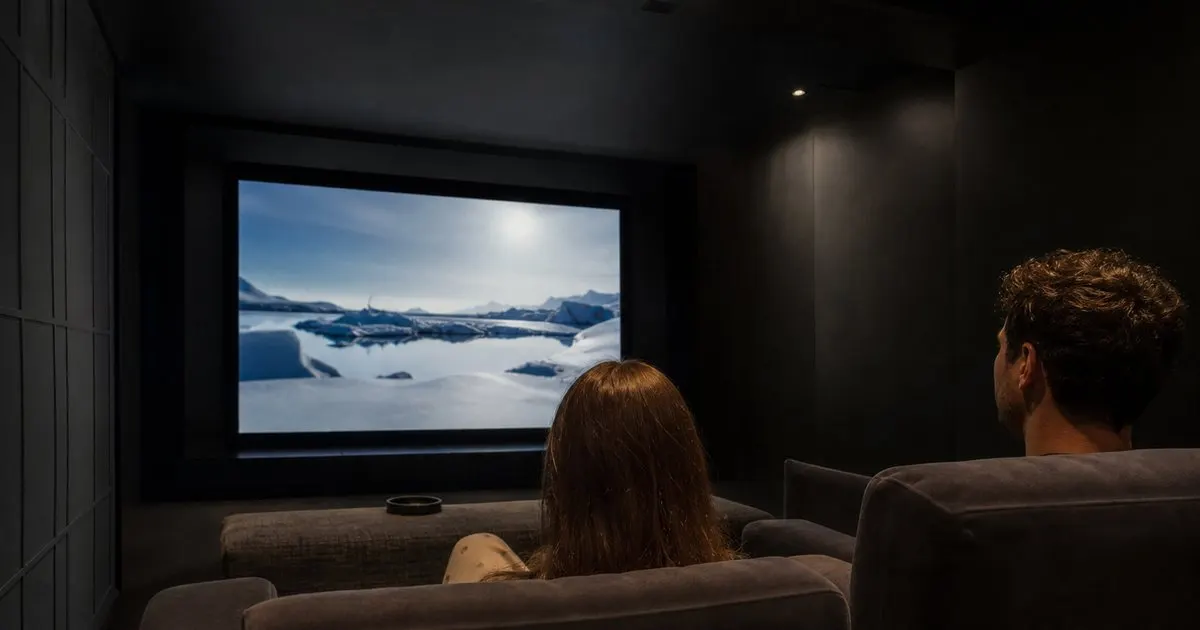
Why darkness matters
A projected image creates its blacks by the absence of light, so any stray light in the room lifts the black level and flattens contrast. The darker the room, the deeper the picture. Related: Which projector technology delivers the best image in a light controlled room?
This is why the same projector can look breathtaking in one room and disappointing in another. The equipment has not changed, only the light around it has. Related: What is the best way to light a home cinema without washing out the picture?
Keep reading: Which projector technology delivers the best image in a light controlled room?, What acoustic treatments actually transform a home theater listening experience?, How many seats can a luxury home cinema comfortably accommodate?. See how Theatrvault helps you an expert guide to designing a true home cinema.
How dark is dark enough
You are aiming for control rather than perpetual pitch black. The ability to seal daylight and use only low, indirect lighting is what preserves the image whenever you watch.
Perfect darkness during a film gives the best result, but a well controlled room with dark surfaces still looks excellent. The goal is to remove uncontrolled light, not all light forever.
Surfaces and reflections
Even in a dark room, light bounces off pale walls, ceilings, and floors back onto the screen. Dark, matte surfaces absorb that stray light and protect contrast.
This is why serious cinemas favor deep, non reflective finishes. The room itself becomes part of the picture, quietly making the blacks blacker.
Practical light control
Blackout treatment on windows, a solid door, and dimmable, indirect lighting give you darkness on demand without living in a cave. Low level guide lighting keeps the room safe and usable. Related: What acoustic treatments actually transform a home theater listening experience?
Planned well, the room can be bright and welcoming between films and pitch dark during them. That flexibility is the mark of a considered cinema. Related: Should you build a dedicated cinema or a multipurpose media room?
- Projected blacks depend on the absence of stray light
- Aim for control over light, not permanent darkness
- Dark matte surfaces absorb reflections and deepen contrast
- Blackout windows and dimmable indirect lighting give darkness on demand

Julien Jimenez
Julien Jimenez is an independent software builder based in Paris. He designs, ships, and operates focused SaaS products for small businesses and independent professionals. Read the full author page.
Frequently asked questions
Does the room have to be black during the day?
Only when you are watching. Blackout treatment on windows lets you darken the room on demand while keeping it bright and welcoming the rest of the time.
Do wall colors really matter?
Yes. Even in a dark room, pale surfaces reflect light back onto the screen and lift the black level. Dark, matte finishes absorb that stray light and deepen contrast.
A Cinema Kept Behind Your Own Door
An expert guide to designing a true home cinema. Theatrvault is built to help you put this into practice.
Design your cinemaMore from the Theatrvault blog
Get the complete home cinema rooms guide
Our full buying guide, the price guide, and new research as we publish it. One email, no spam, unsubscribe any time.